
PSYCHOLOGY & THERAPY · GOSFORD, CENTRAL COAST
You don’t have to carry it alone.
Thoughtful psychology, built around you.
Psychological therapy for children, teens and adults, with support shaped around the whole person — their experiences, relationships, strengths, needs and what matters to them.
North Gosford · Telehealth available Australia-wide
Sometimes you just know something needs to change.
You don't need a diagnosis, a perfectly articulated goal or even the words to explain exactly what's happening.
You might be feeling overwhelmed, anxious or stuck.
Perhaps something from the past keeps showing up in the present.
Maybe relationships feel harder than you'd like them to.
You might be exhausted from holding everything together.
Or perhaps you're beginning to understand yourself — or your child — in a different way.
Whatever brings you here, therapy can begin with understanding what's happening for you.
What can psychology help with?
People come to therapy for many different reasons. Whether something has changed recently or you’ve been carrying it for a long time,
psychology can help you better understand what’s happening and find ways to move forward that make sense for you.
Anxiety & Worry

Support for persistent worry, fear, panic, overthinking & anxiety that may be getting in the way of everyday life.
Trauma & PTSD

Trauma-informed psychological support for experiences that continue to affect emotions, relationships, safety or everyday functioning.

Emotional Wellbeing
Support when life feels overwhelming, mood has changed, coping feels harder or things simply haven't felt like yourself lately.
Children & Teens

Developmentally appropriate support for emotional, behavioural, social and psychological concerns across childhood and adolescence.
Neurodivergence

Neurodiversity-affirming therapy for autistic and ADHD children, teens and adults, supporting self-understanding, regulation and individual needs.
Relationships & Connection

Individual psychological support to understand relationship patterns, attachment, boundaries, communication and connection.
Finding the right fit matters…
Therapy isn't one-size-fits-all.
The relationship you have with your clinician is an important part of therapy. Feeling comfortable enough to talk openly matters — but so can your clinician’s experience, therapeutic approach, communication style and understanding of what you're seeking support for.
And if you've tried therapy before and it didn't feel quite right, that doesn't necessarily mean therapy isn't for you. Sometimes the person, approach or timing simply wasn't the right fit.
That's why we don't expect you to choose from a list of names and hope for the best.
Tell us what you're looking for.
Our Client Care Team will consider your needs, preferences and what you're hoping for from therapy to help identify a clinician who may be suited to you.
“But what if they're not the right fit?”
It's okay to think about fit.
Feeling comfortable enough to talk openly and work collaboratively with your psychologist is an important part of therapy.
Sometimes a therapeutic relationship feels right quite quickly. Other times it takes a little time to develop.
And occasionally, despite everyone's best intentions, the fit may not feel right.
You can talk to us about that.
If you're uncertain about the fit, you're welcome to speak with your clinician or our Client Care Team about your experience and what you might need.
What does therapy actually look like?
It isn't just talking about your problems.
Psychological therapy is a collaborative process.
Depending on what you're experiencing, your goals and the approach being used, sessions may involve:
Making sense of patterns
Understanding thoughts, emotions, behaviours, relationships or experiences that may be keeping difficulties going.
Building practical strategies
Developing ways to respond differently to difficult thoughts, emotions, situations or everyday demands.
Understanding your nervous system
Recognising patterns of stress, overwhelm, regulation and safety.
Processing experiences
Where appropriate, therapy may help people safely work through difficult or traumatic experiences.
Developing self-understanding
Making sense of your needs, strengths, values, identity and the way you experience the world.
Trying things differently
Therapy can provide a space to explore new responses, boundaries, communication or ways of approaching challenges.
Therapy is shaped by your needs, experiences and goals.
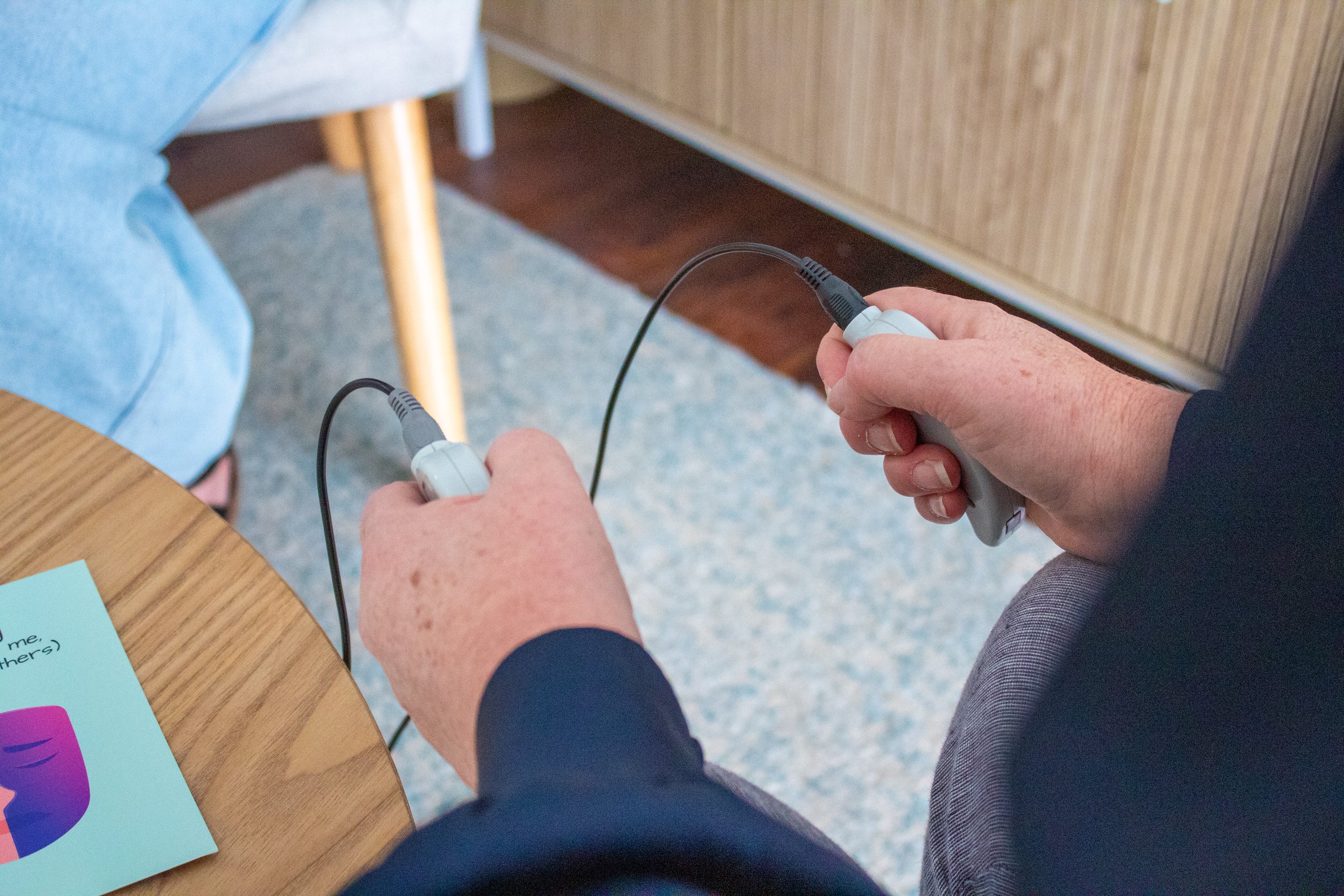



Our approach to therapy
We look at the whole picture.
Trauma-informed
We recognise that past and present experiences can shape how people respond, cope, connect and feel safe. Therapy is approached with sensitivity to the person's experiences and individual needs.
Neurodiversity-affirming
Different brains experience the world differently. We work to understand individual communication, sensory, emotional and processing needs rather than expecting people to conform to one way of functioning.
Whole-person
Mental health rarely exists in isolation. Where relevant, we consider relationships, environment, nervous system, identity, life experiences, strengths and the systems surrounding the person.
Collaborative
Therapy isn't something that's simply done to you. Your perspectives, priorities and goals help shape the work.
Evidence-informed
Our psychologists draw on established psychological approaches and clinical reasoning to develop therapy appropriate to the individual and presenting concerns.
Purposeful
Therapy should have a reason for being there. Together, you and your psychologist can develop an understanding of what you're working towards and revisit this as therapy progresses.

Your first appointment
You don't need to prepare a speech.
Your first appointment is an opportunity for your psychologist to begin understanding you and what has brought you to therapy.
They may ask about what's happening now, relevant history, what you've already tried and what you're hoping might be different.
You don't need to tell your whole story at once.
You can take your time.
You can ask questions.
And if you're not quite sure what you want from therapy yet, that's something you can work out together.
What to expect
From reaching out to getting started.
1.
Tell us what you're looking for
Complete our enquiry form and tell us a little about what's happening, what you're looking for and anything that's important to you in a psychologist.
You don't need to know which therapy approach you need.
2.
We'll help find the right fit
Our Client Care Team considers your needs and preferences alongside our clinicians' areas of practice, approach and availability.
We'll then talk you through the next step.
3.
Meet your clinician
Your first appointment is an opportunity to begin getting to know one another, understand what's been happening and discuss what you might like support with.
4.
Develop a way forward together
As your psychologist develops a better understanding of you, therapy can become more focused around your needs and what you're hoping to work towards.
5.
Review along the way
Needs and priorities can change. Therapy can include conversations about how things are going, what's useful and whether the focus needs to shift.

Therapy across the lifespan
Different stages of life bring different challenges.
Children
For children, emotions and experiences aren't always easily expressed through words.
Therapy may use developmentally appropriate approaches to help understand what a child is communicating through their emotions, behaviour, relationships and play.
Where appropriate, working with parents and caregivers may also form an important part of support.
Teens
Adolescence brings significant changes in identity, relationships, independence, learning and emotional development.
Therapy can offer a space for young people to explore what they're experiencing while developing understanding and strategies that make sense for them.
Adults
People seek therapy at many different points in adulthood — sometimes because something has happened, sometimes because a longstanding pattern has become harder to carry, and sometimes because they're ready to understand themselves differently.
There isn't a right age or a right reason to seek support.
Different people need different approaches.
Your clinicians draw from a range of evidence-informed therapeutic approaches depending on their training and the needs of the individual.
These may include:
Cognitive Behaviour Therapy (CBT)
Acceptance & Commitment Therapy (ACT)
Eye Movement Desensitisation & Reprocessing (EMDR)
Dialectical Behaviour Therapy-informed approaches (DBT)
Solution-Focused Therapy
Attachment-informed approaches
Play and developmentally appropriate therapy
Narrative approaches
You don't need to choose a therapy modality before you enquire.
How do I know if therapy is helping?
It's a reasonable question to ask.
Therapy doesn't always involve obvious or immediate change, and different people will be working towards different things.
Depending on your goals, you and your clinician might notice changes in areas such as:
Understanding patterns more clearly
Responding differently to difficult situations
Developing new skills or strategies
Increased awareness of emotions or needs
Changes in relationships or communication
Greater ability to engage in things that matter to you
There may also be periods where therapy feels challenging or where priorities need to change.
You are allowed to ask how therapy is going.
Talking together about what's useful, what isn't and what you need from therapy can be a helpful part of the therapeutic process.
“Do I have to stay in therapy forever?”
Therapy doesn't have to be open-ended.
How long someone attends therapy varies considerably depending on their needs, goals, circumstances and the type of support being provided.
Some people seek support around a particular issue. Others benefit from longer-term therapeutic work.
Your psychologist can talk with you about the focus of therapy and review this with you over time.
You're part of those decisions.
Questions you may have
-
No. You can contact us directly and self-refer for psychology.
If you have a Mental Health Treatment Plan from your GP, you may be eligible for Medicare rebates for eligible psychology sessions.
-
You don't have to choose alone.
Tell our Client Care Team what you're seeking support for and anything that's important to you in a clinician, and we'll consider which of our available clinicians may be suited to your needs.
-
That's completely okay.
You don't need to choose between CBT, ACT, EMDR or another therapy before you contact us.
Your clinician can discuss appropriate approaches after understanding more about you and what you're seeking support for.
-
Your psychologist will begin getting to know you, what has brought you to therapy and what you're hoping for from support.
You don't need to prepare your entire story or know exactly where to start.
-
This varies according to your circumstances, needs and therapeutic goals.
Your clinician can discuss appointment frequency with you and review it as therapy progresses.
-
There isn't one standard timeframe. Some people attend for a relatively focused period, while others engage in longer-term work.
Your needs and goals can be reviewed collaboratively throughout therapy.
-
You can raise this with your psychologist or speak with our Client Care Team.
We can talk with you about what isn't feeling right and possible next steps.
-
Individual psychology appointments range from $190–$250 per session, depending on the clinician you see. A once-off $25 administration fee applies when commencing services with us and supports the set-up and administration involved in getting your care underway.
If you're eligible for a Medicare rebate under a Mental Health Treatment Plan, this may reduce your out-of-pocket session cost.
Private health insurance rebates may also be available, depending on your fund and level of cover. You'll need to pay the session fee and then submit your claim directly to your health fund for any applicable rebate.
NDIS participants: Psychology services are billed at the applicable rate outlined in the current NDIS Pricing Arrangements and Price Limits. A service agreement will be completed with your clinician at your initial appointment, outlining the agreed supports.
If you request a written report or other work outside your appointment, this is generally billed at your clinician's applicable hourly rate. We'll discuss any associated fees with you before the work is undertaken.
Our Client Care Team can answer any questions about fees before you get started.
-
Yes, where psychology is an appropriate support within the participant's NDIS funding arrangements. Then link:
-
Yes. Psychology appointments are available via telehealth, providing greater flexibility for people who prefer or require remote appointments.

Not sure where to start?
You don't need to know exactly what you need.
You might know the problem.
You might know how you feel.
Or you might simply know that something isn't working anymore.
Tell us a little about what's happening and what you're looking for.
We'll help you work out an appropriate next step.

Ready to reach out?
Taking the first step doesn't mean committing to a particular therapy, psychologist or long-term treatment plan.
It simply starts a conversation about what you're looking for and how we may be able to support you.