
The Art of Un-Grip: Why White-Knuckling Your Life is Wearing You Out
We’ve all been there. You’re trying so hard to force a specific outcome—whether it’s making a relationship work, landing a particular job, or just trying to perfect your daily routine—that your jaw is permanently clenched, your shoulders are practically touching your ears, and your brain feels like it has 47 tabs open at the same time.
At The Heart and Mind Collective, we talk a lot about alignment. But true alignment isn't about bending the world to your will; it's about learning when to white-knuckle, and when to completely soften your grip.
Welcome to the art of un-gripping.
The Illusion of Absolute Control
Our minds love certainty. The psychological brain treats ambiguity like a threat, which is why it tries to micromanage every variable. If we just think about it enough, plan enough, or worry enough, we can prevent bad things from happening, right?
Not exactly. There’s a massive difference between intention and control:
Intention (Heart-Led): Choosing a direction, putting in honest effort, and staying open to how things unfold.
Control (Mind-Driven Fear): Forcing a rigid path, obsessing over the timeline, and panicking when things deviate by an inch.
When we confuse the two, we enter a state of chronic hyper-vigilance. We aren’t actually steering the ship anymore; we’re just shouting at the waves.
What White-Knuckling Costs You
When you grip onto life too tightly, you aren't just exhausting your mind; you’re shutting down the very parts of yourself that allow you to heal and grow.
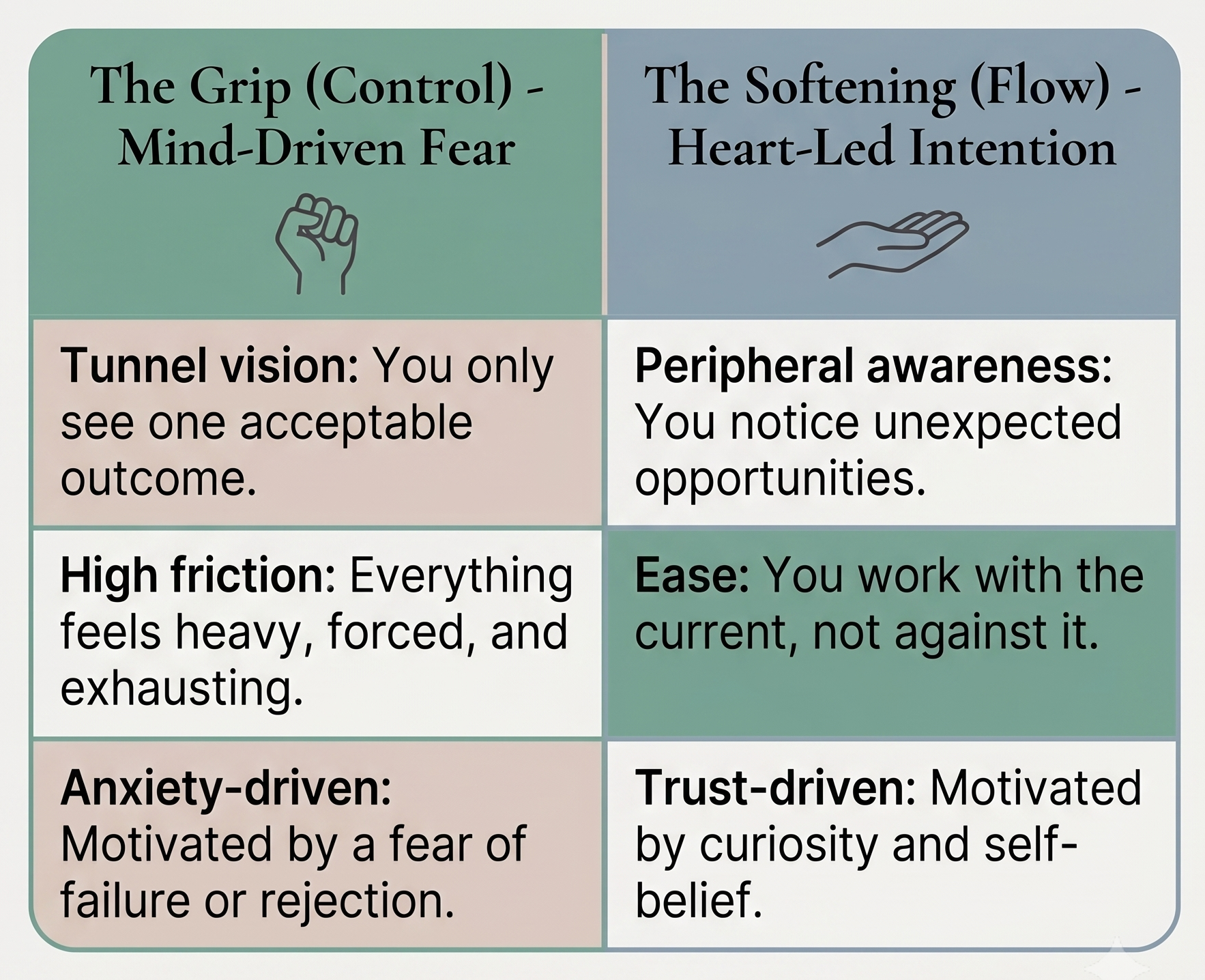
Note: Softening your grip doesn't mean giving up. It means trusting that you are resilient enough to handle whatever happens next, even if it wasn't in your original game plan.
How to Loosen the Grip Today
If you realise you’ve been holding your breath and forcing things to happen, here is a quick roadmap to help your heart and mind find their equilibrium again:
1. Identify Your "Grip Points"
Ask yourself right now: Where am I trying too hard to force a result? Is it a conversation you keep rehearsing? A milestone you feel you're falling behind on? Just naming where the tension lives reduces its power over you.
2. Practice the "Exhale Check"
Set a random alarm on your phone for tomorrow. When it goes off, drop your shoulders, unclench your jaw, and take one massive exhale. Notice how much physical tension your body was holding onto just to "keep things together."
3. Shift from "What if?" to "What is?"
Anxiety lives entirely in a future that hasn’t happened yet. When your mind starts spinning a web of catastrophic outcomes, gently pull it back to the present room. What is true right now, in this exact second? Usually, in the immediate present, you are completely safe.
Trusting the Space In-Between
The most beautiful things in life—genuine connection, creative breakthroughs, sudden moments of pure joy—rarely happen when we are micromanaging our days. They happen in the spaces we leave open.
So today, give yourself permission to drop your hands. Let the pieces fall where they may for just a moment. You might be surprised to find that when you stop trying to hold everything together, things actually have a chance to fall into place.
Ready to step out of hyper-vigilance and be more at ease? Let’s work through it together. Book an appointment today: www.theheartandmindcollective.com.au/start-here